

Hose bib shut off and drained ahead of the season.
Every January we run frozen-pipe calls that were entirely preventable, and the prevention takes about half an hour on a mild Saturday in the fall. Here is the list, in the order we would do it.
Outside first
Disconnect every garden hose. A connected hose traps water in the bib and that is the classic burst point.
Shut the interior valve feeding each outdoor spigot, then open the spigot outside to drain the line.
Fit insulated covers over the hose bibs. They cost a few dollars each.
Blow out or drain irrigation lines — book this before the schedule fills up in November.
Shut off and drain any outdoor shower, which is a very Long Island thing to forget.
Then inside
The pipes that freeze are the ones in unheated space: crawl spaces, garages, attics, and runs inside exterior walls. Pipe insulation on any accessible run in those areas is cheap and effective. If you have a genuinely problematic run that freezes most years, self-regulating heat tape solves it permanently.
While you are down there, find your main shutoff and turn it fully closed and open again. Valves that sit untouched for years seize, and the moment you discover that is always the moment you urgently need it to work.
When the hard freeze comes
Open cabinet doors under sinks on exterior walls so heated air reaches the pipes.
Run a pencil-width trickle from the fixture furthest from your main overnight.
Keep the thermostat at or above 55°F even if the house is empty.
If you are away for a stretch in winter, shut the main and drain the system.
A faucet stopped running in a cold snap?
You have a freeze and a burst is pending. Open the faucet, apply gentle heat with a hair dryer working from the faucet back toward the freeze, and never use an open flame. If you cannot reach it, shut the main and call us.
Pipes usually burst on the thaw rather than the freeze, which is why the damage so often shows up the morning after the cold breaks. Catching it beforehand is the whole game.
Tony Serrano
Flow’s Plumbing has served Long Island since 2004. If this is happening at your house, give us a call.
Call and speak to someone who works here. Average response across Nassau and western Suffolk is about 90 minutes.
Homeowner guides
More From the Crew

Waterproofing
7 min read
Why Long Island Basements Flood — and How to Actually Stop It
High water table, sandy soil and roof water landing at the foundation. Three causes, and only one of them needs a pump.
Read article

Maintenance
6 min read
Hard Water on Long Island: What It Is Doing to Your Pipes
The white crust on your showerhead is the visible part. The expensive part is happening inside your water heater.
Read article
Water Heaters
8 min read
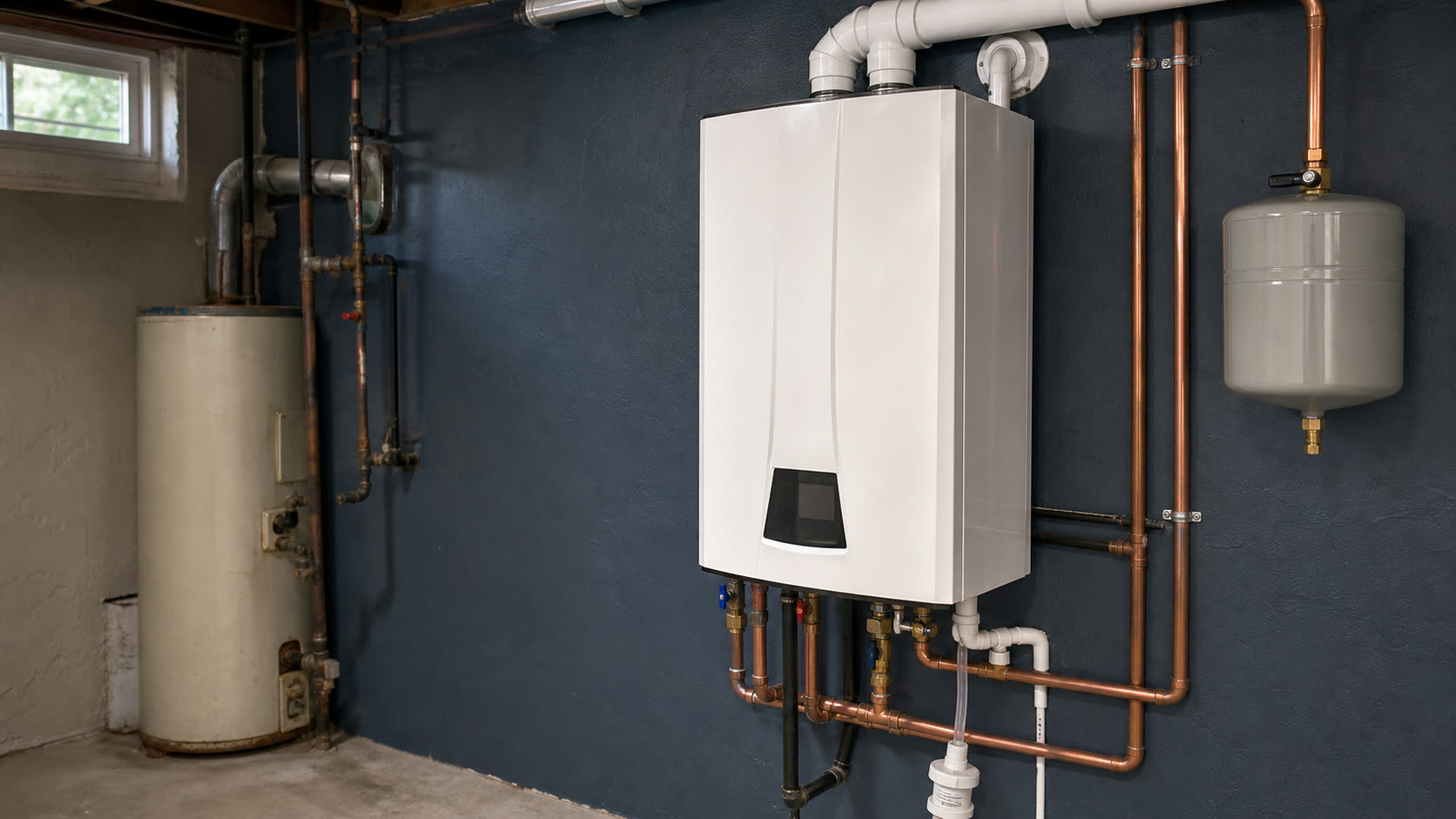
Tankless vs. Tank: Which Makes Sense for a Long Island Home
Tankless is better technology. That does not automatically make it the better purchase for your house.
Read article
Quick quote
Tell Us What It Is Doing. We Will Tell You What It Costs.
Every request gets a real answer from a real plumber within one business day. Some jobs need us to come and look first — if yours does, we will say so rather than guessing at a number.