

A properly installed pit with primary and backup pumps.
If you own a house on Long Island and your basement has ever taken on water, you have probably been told you need a bigger pump. Sometimes that is true. More often the pump is the last thing that should change, because water is arriving faster than any pump can be expected to keep up with, and the fix is upstream.
Cause one: the water table is genuinely high
Across much of the south shore, groundwater sits within a few feet of the surface, and it rises with sustained rain and with tide. When it rises above the level of your basement floor, water finds its way in through the cold joint where the floor meets the wall. This is hydrostatic pressure, and you cannot seal your way out of it — paint-on waterproofing applied to the inside of a wall with groundwater behind it will fail, every time.
The correct answer here is drainage and a pump: an interior perimeter drain at the footing, tied into a properly sized pit, that relieves the pressure and gives the water somewhere to go that is not your floor.
Cause two: sandy soil moves water fast
Long Island sits on sand and gravel outwash. That is excellent for drinking water and awful for basements, because water moves through it laterally at speed. Rain that falls on your neighbor’s property can be at your foundation within the hour. It also means a downpour translates into basement inflow much faster here than it would in clay soils.
Cause three — and this is most of them: roof water
A surprising share of what homeowners call groundwater is roof water. A 2,000 square foot roof sheds well over a thousand gallons in an inch of rain. If your downspouts discharge at the foundation, all of that lands in the first few feet of soil against your wall, which is exactly the soil that was disturbed and backfilled when the house was built and is therefore the loosest on the property.
Start here, it is free
Extend every downspout at least six feet from the house, clear the gutters, and re-grade so the ground falls away from the foundation. We have watched this alone dry out basements that had been wet for a decade.
What a real system looks like
Water managed outside first: gutters, extended leaders, positive grading away from the wall.
An interior perimeter drain at the footing where hydrostatic pressure is the issue.
A pit sized to actual inflow, not to whatever fits the hole that is already there.
A cast-iron primary pump with a proper check valve and a discharge that cannot freeze shut.
A battery backup with an alarm — because the storm that floods you is the storm that kills your power.
A test every September, before the season rather than during it.
The backup is not optional here
This is the point we make most often and the one homeowners resist most, so it is worth being blunt. A sump pump running on house current protects you against every scenario except a nor’easter or a hurricane, which are the two scenarios that flood Long Island basements. If you install one thing this year, install the backup.
If your basement has taken water more than once, give us a call and we will walk the outside of the house with you before we quote anything. Often the first fix does not involve plumbing at all.
Mike Flowers
Flow’s Plumbing has served Long Island since 2004. If this is happening at your house, give us a call.
Call and speak to someone who works here. Average response across Nassau and western Suffolk is about 90 minutes.
Homeowner guides
More From the Crew
Waterproofing
7 min read
Why Long Island Basements Flood — and How to Actually Stop It
High water table, sandy soil and roof water landing at the foundation. Three causes, and only one of them needs a pump.
Read article

Maintenance
6 min read
Hard Water on Long Island: What It Is Doing to Your Pipes
The white crust on your showerhead is the visible part. The expensive part is happening inside your water heater.
Read article
Water Heaters
8 min read
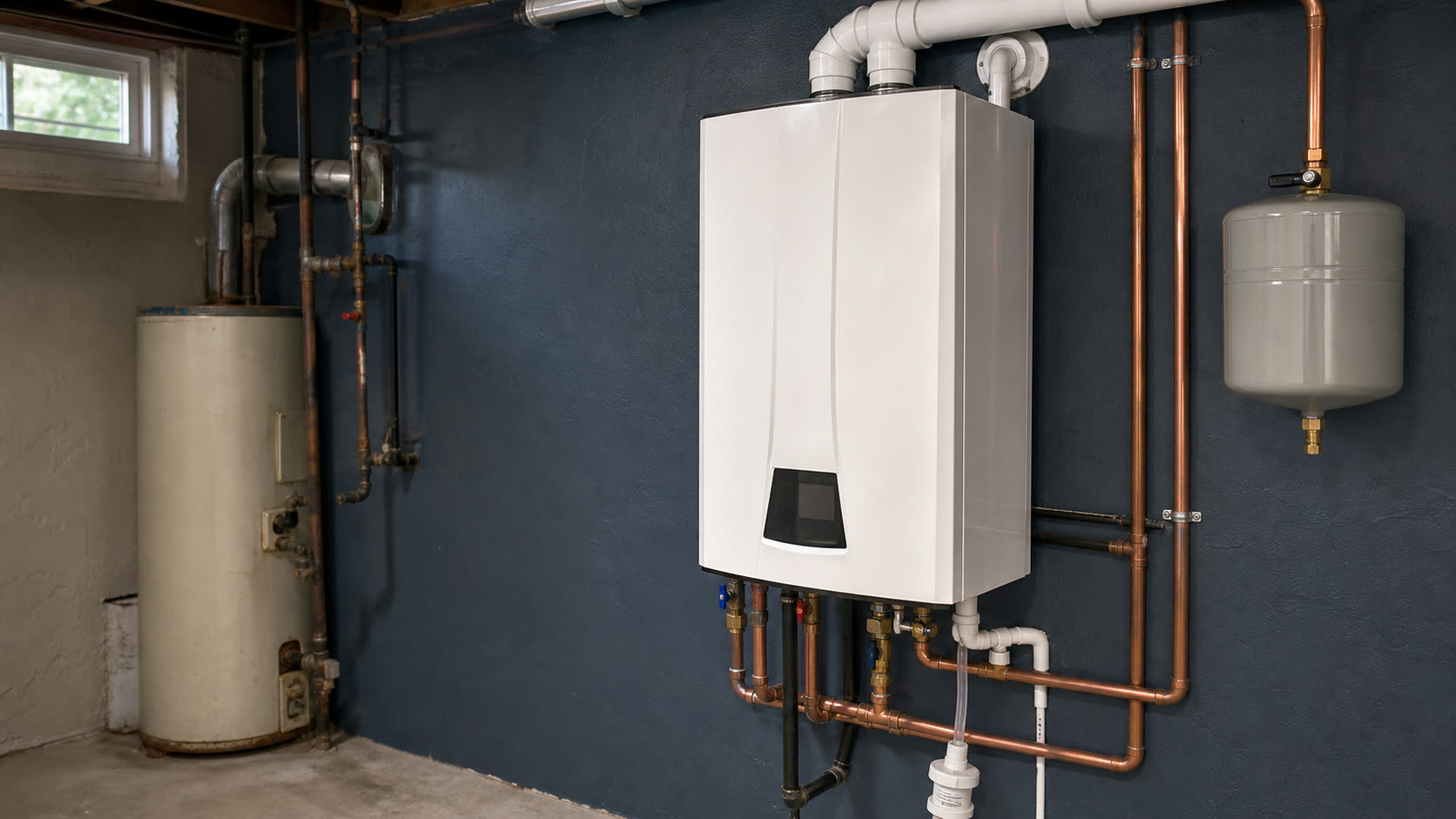
Tankless vs. Tank: Which Makes Sense for a Long Island Home
Tankless is better technology. That does not automatically make it the better purchase for your house.
Read article
Quick quote
Tell Us What It Is Doing. We Will Tell You What It Costs.
Every request gets a real answer from a real plumber within one business day. Some jobs need us to come and look first — if yours does, we will say so rather than guessing at a number.